
Is this the year mobile will finally take off?
NEW YORK - Mobile is happening. Location-based social networking services are battling it out, and the city is alive with augmented reality apps. Barcode scanner apps are must-haves for competitive pricing while shopping. And iPads abound! 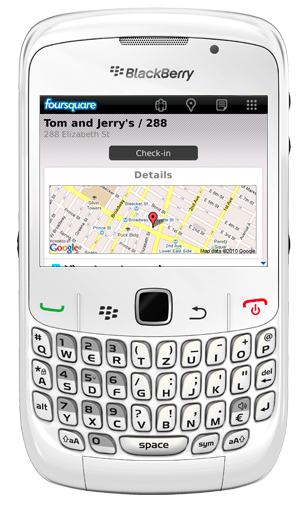 If 2009 was Twitter year, 2010 is the year of (mobile) social mapping.
There is huge potential for a country like the US with near perfect mobile penetration – everyone is walking around with a GPS-enabled device that enables location-based and contextual communication that is hopefully more relevant. At the same time, users are ever-connected to the web and can pull up content as needed – it still blows my mind that I can watch YouTube videos while waiting for the train thanks to the great (and often free!) WiFi.
Is this the year mobile will finally take off in the Philippines?
Technically mobile took off in the Philippines in the mid-nineties. We could text with one hand and were "d2 na me"-ing before anybody in the first world. Today we have a flourishing blogging community and are some of the most engaged social media users in the world. We even have our own crop of YouTube celebrities.So why hasn't anybody monetized mobile?
(I'm trying to find stats on the mobile internet access in the Philippines "not taking off", but haven't yet. I don't think it is a huge stretch though to say that it has not reached mass-level usage.)My take on this is that people are hesitant to pay for mobile browsing. The availability of the iPhone and Blackberries has certainly helped to drive usage. But the reason that mobile communication really took off in the Philippines in the first place was that at just PHP 1.00 per text (that's only USD 0.02!), it was the cheapest and easiest way to communicate. Most people still prefer Prepaid (similar to AT&T's Pay-as-you-go Plans) to Postpaid, which locks users in for two years with a minimum monthly spend whether or not the phone is used. Prepaid allows users to load their mobile accounts with micro top-ups, as they have disposable cash. That's the third world model I guess. In which case, are people going to spend their extra cash on mobile surfing?
Going online in the Philippines has rapidly risen over the past few years with the rise of Internet Cafes, where users make micropayments per minute or hour. This way, Filipinos can skip the (expensive) hardware hurlde of having to invest in a laptop or PC, then having to pay an additional fee for dial-up or DSL. There are in fact vendors trying to sidestep this problem - Smart's SurfTV gives users a modem that can be connected to their TV, loaded through prepaid credits and used to go online.
I think though that we will see Filipinos turning to the mobile (instead of their TVs) to skip that hardware hurdle, as data plans become more affordable and user experience on mobile improves.
Opportunity mapping
Here are a few areas that need to be improved to drive mobile internet adoption- HARDWARE: Affordable handsets with cameras and GPS and better mobile surfing user experience.
- CONNECTIVITY: I think that telcos should let us mobile surf for free! Give consumers a chance to build the behavior and habit of mobile browsing, with faster connections - Filipinos love watching YouTube videos, that should be the litmus test on wireless internet speed.
- CONTENT: If people can get a better experience checking or updating their Facebook or Twitter accounts on their computers, they may not pay extra to do it on mobile. Not to say that I and many others don't already do this! But we need some location-based applications or content that have different user experiences when used on mobile. Foursquare is a good example, and it won't even work on a PC.
Summing up
I'm not sure where telcos are going with this (not as if I don't have a telco client, I should definitely ask), but I would seriously invest in some of these opportunities to shift Internet usage from PC to mobile. The potential of creating a context-aware platform of relevant communication that combines data, behavior (e.g. each user's past searches or sites visited), as well as editorial content (trendspotting and trend-pushing) is huge.Telcos have to be the first to invest in some value-driven communication that will educate the market and build the behavior.
I used to think that nothing would supplant my net access through PC. But now that I've seen the difference of mobile surfing, I would at least add it to my "repertoire" (as our strat planners would say). In addition, I would pay more to have access to products and services on-the-go — ever hear a song then download it on the spot on iTunes? Life-changing!


