Wednesday, June 30, 2010

internet marketing / be your digital best: digital marketing philippines

Google Ad Words reports that the term "internet marketing" (9900 searches in May) is searched for a lot more than the term "digital marketing" (vs 720 searches) in the Philippines.

I wish I could re-set this whole blog to remind us to "be our INTERNET best", but that really isn't practical. The web is, right now, the biggest chunk of "digital" channels. But increasingly, mobile is becoming more important. And each traditional / mainstream medium is finding ways to go digital as well - TVs in the US run on digital signals, radio stations are now streaming online. Dynamic electronic billboards are slowly replacing traditional  tarpaulin OOH.

I wonder when local searches will catch up with this. When they do, www.beyourdigitalbest.com will be waiting!


photo by Andrew-Hydevia PhotoRee
SHARE:

Sunday, June 27, 2010

DIGITAL STRATEGIC PLANNING | be your digital best: digital marketing philippines

Being in tune with the digital landscape in order to find meaningful roles that brands can play in consumers’ digital lives
  • Identifying the Role of Digital in line with interactive capabilities & relationship-building
  • Designing a Digital Engagement Plan that capitalizes on consumers’ digital habits
  • Developing a Measurement & Optimization Strategy that will trace accountability & maximize ad budgets

Have been trying to define this all weekend! What do you think?
Can I do all of these things? Almost! The biggest problem is the third bullet. But am working on it.

SHARE:

Wednesday, June 16, 2010

a new call-to-action: click or call

I liked hearing a lot of commercials ending with "CLICK OR CALL" as the call-to-action.

It acknowledges the diversifying ways that people are getting in touch with brands, and reminding them that they can often get easy, relevant service through optimized company websites.

photo by somefool ∴ Mattvia PhotoRee
SHARE:

Tuesday, May 25, 2010

Internet Marketing Philippines

What is the state of Internet Marketing Philippines?

Some questions I have, and hope to slowly find the answers to:
  • How much are we really making? (Industry revenue)
  • Who are the most "digital" clients - among multinationals, other big local businesses and SME's?
  • Who are the key players - agencies, boutiques or freelancers?
  • Who is leading the charge on to develop research and data on usage among different segments? 
  • What are the localized industry measurement standards?
I think these are things we need to figure out to properly grow the industry.
    SHARE:

    Wednesday, May 19, 2010

    Mobile social networking primer: Foursquare

    (Or, a starter guide for my dad — He has never belonged to any social networks, not Facebook, Twitter or even Gmail. So I was very surprised to receive an invite to become his Foursquare contact. I wanted to welcome him to social media and help him get started in the space.)


    Hi Dad!

    Congratulations on making it to the social graph (that's what they call our virtual social networks on sites like Facebook and Twitter). Still think it is interesting that you've gotten online via Foursquare, and not through a more obvious platform like the aforementioned Facebook or Twitter. But I think you've chosen a good place to start.

    Thought I'd give you a few tips to maximize your Foursquare membership.
    (Am going to do a follow-up on getting started with Twitter, since I think you'd actually have an even better time with that. But first things first.)


    Ever wanted to be mayor? Foursquare is the way to go

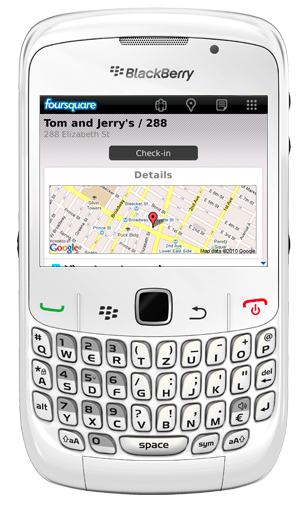
    What it is. A social mapping service that allows users to update their profiles with their whereabouts. Users can manually enter their location (e.g. New York Times Building, Times Square), or select for 4sq's list of venues nearby.

    How to use it
    • Access: You can download an app (for iPhone, Android or Blackberry) or log on to the mobile site.
    • "Check-in": Using the app or mobile site, check-in to different places - Ayala Tower (office), Lumbang (home), Greenbelt Theater, Salcedo Market, Fully Booked, etc.
    • Add a Tip: You give Tips about what to do, eat or see at different venues, or browse others' recommendations.
    • A note on accuracy: You're only supposed to check-in when you're actually at the place you're checking in to. But Foursquare's GPS isn't very strict and you can check-in from across the street or up to a few blocks away. It can tell though if you're not in the area at all and won't give you points.
    • Get points!: Foursquare keeps a leaderboard of your points earned (by checking in, going to new places, etc) vs. your contacts'. You do want "quality" check-ins because only those will earn you mayorships and badges.

    What you get
    • Be crowned Mayor: If you have the most check-ins at a given venue, you are automatically crowned "mayor" of that place. What's the point? Who doesn't want a virtual crown? Some establishments are starting to give mayors special freebies or privileges. Not sure if that's true for Manila Mayors yet though.
    • Get badges: Even better, Foursquare rewards usage with badges. This is where it gets fun - you get these badges for completing different levels of usage - when you check in 1, 10, 25, 50 times, when you check in 4x in a week, etc. There are location-specific badges, like one for making it above 59th St. in NY or riding the Bart in SF 7x. There are branded badges - I have one for hitting five Starbuckses. My badges are proudly on display on the left side of this page!

    Why to use it (or not)
    • Why not: There are privacy concerns - people wonder if they're asking to be robbed by broadcasting to the world that they aren't home. The game also gets tiring after you've acquired several badges.
    • Why: IT'S FUN! Especially if you like games, and it really hits a sweet spot for digital or competitive people like me.
    • Why, when more people are using it: Assuming people use the service regularly, it would be a great way to keep track of friends and family members. It's also a good way to discover new places through friends' check-ins.
    • Why, if you were a business-owner or brand guy: It is a great tool to find and interact with customers. It’s also a nice platform to get people to interact with your brand – Bravo puts listings of their recommended restaurants (e.g. by Top Chef chefs) that people can check-in to, to get Bravo badges. Jimmy Choo just launched a new shoe with a 4sq scavenger hunt!

    And guess what - you can sync your Foursquare to your (upcoming?) Twitter account. But more about that in an upcoming post.

    See you on the square!


    Bea  :)
    SHARE:

    Thursday, May 13, 2010

    micro-engagement approval

     I remember how long it used to take to get approval on a TV ad, a thirty-second, one-message-fits-all spot.

    We would get the client brief (often missing certain details, like sometimes the product!), work on internal strategy. Then creatives would work their magic and we would be off to client, so confident in our ideas that you would have thought that we had the cure to cancer on a storyboard. Presentation, revisions. Sometimes this would happen one, two, three... up to a dozen times depending on the client in question. Finally, board approval. A producer would be brought in, the project bidded out to production houses and directors. When finally the AE found a way to wrangle creative, client, production team and director on to the same page to agree on budget, timeline and treatment - advertising project management can get so convoluted that when things work out it feels like the starts have miraculously aligned - the real chaos would begin.

    Casting, acting workshops, costume reviews. Then the shoot - sometimes early in the morning, sometimes very far out of town, hazy day/s of catered food and lights & action. The film would be graded, sound dubbed (I think), creatives present at all events. Then agency viewing of the edit or "offline", then client viewing. Revisions. Back and forth, revisions. And once ready, preparation of the final or "online" material. The AE would then head to the Ad Standards Council for yet another approval of the material. By this time the media agency would have gotten involved, then release tapes would be prepared and sent out to each of the stations in the visual media schedule.

    All of this for one material.


    This is what I started thinking while reading about micro marketing. I guess the idea is that we're living, marketing and selling in a long-tail world and millions of micro-segments exist. And we can reach them now online, often 1:1 in real conversations.

    But that idea takes on a different meaning when you're the digital person in a traditional (media) world. I can't imagine how approval is going to happen when digital kicks in full force and we're going to have to get clients to sign off on millions of micro-messages. Maybe we'll need to hire someone to handle approval management. Daunting. Still exciting.
    SHARE:

    the search is on for cute boots

    I love this because it reinforces my point about Facebook-as-news-source.

    SHARE:

    Surveillance via Facebook

    Facebook is the new “mass media”, and fulfills an important media function: Surveillance.

    photo by gerlosvia PhotoRee


    There are many communication theories that cover our relationship to media. A quick search on Google reminded me that it was Lasswell (he had the “who, says what, in which channel, to whom, and with what effect” model) who theorized that mass media fulfills, among others, a surveillance function, and gives the audience information about what is going on in the world that “everybody” knows. In the former “mass” media age, this pertained to news – as it relates to me today, updates on the identity of the Times Square bomber or the race for Vice President in the Philippine elections.

    Like many communication theories, Lasswell’s has received criticism for being too simplistic and general. But I’ve always rememebered and agreed with the idea of surveillance. I think, regardless of mass media, that we are observant beings who have varying levels of voyeuristic tendencies – everybody gossips. And as social networks like Facebook have expanded in terms of both reach (currently over 10M Philippine users) and granularity (status updates, likes, comments, privacy settings, etc), there is a lot more information going around that we can monitor.

    Surveillance & me
    When I was in college, I was pretty “tsismosa”, that’s Tagalog for “gossip”. In our group I liked knowing what was going on – most especially in the love / lust / like category. When we went out drinking, people would wait for me to get tipsy in case I spilled the latest tsismis (gossip). Friends actually ended up revealing a lot of secrets that they assumed I’d already heard. Good times.

    Since I started working, I’ve lost touch with a lot of people and have certainly regressed in terms of knowing what is going on with everyone. I no longer have the latest news on who is getting together, breaking up, who is looking for a job, in danger of getting fired, in the process of being pirated, etc.

    Surveillance via Facebook
    But since more Filipinos started getting on Facebook in 2007, it has become my news central. It tells me who has resigned, who is travelling and where, who has broken up or is getting engaged, what bands are coming to town. From the latest Farmville acquisitions, or the extra Café Word stock, to the sports / elections / entertainment updates, Facebook is a great way to survey what is going on in my social sphere. Event invitations tell me the must-see concerts or the must-attend parties, relationship status tell me who is newlly single and on the rebound, tech-savvy friends give the latest must-have gadgets, and pop-culture junkies tell me what movies, music or YouTube clips not to miss. From thousands of miles away, I’ll even find out which of my officemates are being subjected to torturous overtime.

    I don’t like to read the news (hence the extremely “personal” connection to the surveillance function!) but I am even more attuned now to current events. If it is important, someone will post it on Facebook. That is actually how I found out about the Times Square bombing or read vice presidential candidate Mar Roxas’ supporters praying that he would somehow still win the VP race.

    Mass, i.e. Many-to-many
    Facebook is not a “mass medium” in terms of old-school broadcast that distributed one set of content to a mass of people, one-to-many. But it is “mass” in the sense that it broadcasts content to millions. Only the content comes from all the different users, making it a many-to-many mass medium.
    In addition, the fact that the “many” are my personal contacts actually helps to validate “news” since I know that I can trust most of them. I am also usually aware of the different personal value systems and the biases each one may have. And even taking that into account, there is no longer a need to depend on an “omnicious” news commentary.

    Maybe it’s just me. But paying attention to my Facebook news feed makes me feel like I’ve got a handle on what’s going on in the world, coming from a network that I actually care about – my social graph.
    SHARE:

    Wednesday, May 12, 2010

    buzz campaign - who you gonna call?

    Or, AI(D)A in the NYPL

    So I went to the New York Public Library on 42nd last Saturday. I love books and wish I could have grown up with establishments like these in my city (in fact I dream of opening on in Manila one day), so I definitely wanted to go at least once on this trip. I was on Skype with my family (who are back home in Manila) right before I went, and my sister mentioned that I should try doing my own take of a "sweded" Ghostbusters spoof. Right.

    But while I was in one of the reading rooms on the third floor, who should show up but the "Ghostbusters"! Attention.


    They walked into the room, serious expressions on their faces. Soon two "ghosts" showed up - as in two guys wearing bed sheets. I thought I took a video of the "chase" that ensued, but it didn't work out. (I don't know how but the video I actually took was of my laughing chin.) The busters chased the ghosts out of the room.

    On my way out, librarians were handing out petition letters - ah, the product sell. Turns out that the library's budget is in danger of being cut and they looking for support to retain it. Interest.

    Naturally I turned to the web. This is what came out when I first opened their website:


    It lists the "product features" that may be lost if they lose the $37M. I would definitely sign up if I actually lived in New York! If I was an actual resident who was at the library or on their website, it seems likely that I were some sort of stakeholder and would definitely care if up to ten branches were shut and service cut down to four days a week. I would have signed the petition. Action.

    I think they could have made the Ghostbusters effort even more hardworking by seeding a video of the chase, or asking one of the dozen people who pulled out cameras to post their images. Unless that wasn't their intention at all? I don't know. But I found it extremely unexpected, especially since it happened on my first time to the library! If their objective was to increase sign-ups, it would have worked on me!
    SHARE:

    Monday, May 10, 2010

    Can Google Trends predict the outcome of the Philippine elections?

    Here is the Google Trends screenshot on Noynoy, Villar, Gibo and Gordon. Looks like Noynoy has the most searches as of today - is that how the elections will play out? Let's see.


    SHARE:

    Saturday, May 8, 2010

    digital marketing: channel strategy

    I used to link my Twitter & Facebook status updates – when I updated one, it would automatically push it to the other. I would write “I had the best time last night!” on Facebook, and it would go out to the Twittersphere, and all of my tweets about the latest digital conference were blasted to my Facebook contacts. Off-strat?
    There are so many social media platforms and it’s hard to keep track of, let alone maintain, dozens of profiles – social networks, professional networks, blogs, microblogs, lifestreams and most recently, social mapping services. Even Yahoo! and Google now ask for status updates. We want to be everywhere at once, but actually keeping up appearances on all these sites can become complicated and time-consuming.
    So we turn to sync – auto-updating Twitter and Facebook with one entry on Plurk. Or we register for services like Quub that update multiple sites at once. 

    Channel strategy
    Each of us has an online personality manifested by presence on different web channels – Facebook, Multiply, LinkedIn, a blog, etc. And we need to recognize that each channel has (or should have) a different objective. LinkedIn is a professional channel. Facebook, Twitter and YouTube could lean more toward professional or personal, depending on our contacts and how we use the service. But to keep ourselves sane, it helps to figure out what we are doing – and what we hope to achieve – on each site.
    Most people are in it purely for personal reasons – connect with friends and broadcast the latest farm acquisition. But as more people turn to the web for professional branding, the lines blur .
    What I’ve done is to map out (a) the key platforms where I want to participate, and (b) what kind of communication on each, depending on whether I have, or want to have, more of a personal or professional network on each one.

     Personal vs. Professional 
    I finally decided, for example, that Facebook should stay a private channel. It is a site where I interact with a lot of close friends, which isn’t necessarily something I want to expose to a potential employer (theoretically :P). I also have so many notes and photos that have nothing to do with my professional self, not things I want to come out about me on a Google search. So Facebook is just for personal contacts and people I actually know! Most of my Flickr photos are private as well.
    Twitter, on the other hand, is supposed to be a professional channel – digital questions and thoughts, Foursquare updates (a grey area – personal details since they’re location-based but also professional for now, since participation is a digital thing?), links to blog posts. Not to say that I don’t shout out to friends and update about other interests (#nyc, #glee, #yankees!) as well. Other professional channels that I want to build on are LinkedIn and Posterous.
    Figuring this out has helped me decide what content to post on which site.  

    Brand channel strategy 
    Brands need to take the time to do this kind of segmentation as well. The line isn’t as clear as Personal vs. Professional, but communication should still change depending on the channel. Simply syncing Twitter, Facebook and a corporate blog with one-size-fits-all content is a terrible strategy. As a consumer, I think that brands that have exactly the same content on Facebook and their corporate blog are lazy. Users should get added value from engaging with a brand on multiple touchpoints. Cross-linking is of course a great practice, but communication can’t end there.
    Here are some ideas to get started on strategizing communication on the most basic platforms:
    • Facebook: Take advantage of the community and easily visible reactions to your content. Ask users questions and post things that they can “Like”. Maximize tabs with unique and engaging apps.
    • Twitter: Great for 1:1 conversations and short-form updates about brand, product and industry news. Great way to announce links to new content on other platforms.
    • Corporate Blog: Longer-form content about brand, product, category or industry issues. It is a great way to build credibility within your field.
    • Posterous or Delicious: Re-posts of industry news.
    Trial-and-error, but start somewhere 
    There are no hard-and-fast rules and I think most brands will have to try several tactics across the board before finding out what really works. But getting out there and trying is what is important.
    I read an article today about Boeing’s reaction to a letter from an eight-year-old who volunteered ideas about a plane design. Their initial response was to send him a letter officially saying that they weren’t accepting his suggestion, probably an SOP response formulated by their legal team. People criticized Boeing at first, but they jumped in to the discussion and explained their situation to consumers, “We’re expert at airplanes but novices in social media. We’re learning as we go."

    photo by Great Beyondvia PhotoRee
    SHARE:

    Saturday, May 1, 2010

    digital marketing on mobile - will it finally take off in 2010?

    Is this the year mobile will finally take off?
    NEW YORK - Mobile is happening. Location-based social networking services are battling it out, and the city is alive with augmented reality apps. Barcode scanner apps are must-haves for competitive pricing while shopping. And iPads abound!  

    If 2009 was Twitter year, 2010 is the year of (mobile) social mapping.

    There is huge potential for a country like the US with near perfect mobile penetration – everyone is walking around with a GPS-enabled device that enables location-based and contextual communication that is hopefully more relevant. At the same time, users are ever-connected to the web and can pull up content as needed – it still blows my mind that I can watch YouTube videos while waiting for the train thanks to the great (and often free!) WiFi.

    Is this the year mobile will finally take off in the Philippines?
    Technically mobile took off in the Philippines in the mid-nineties. We could text with one hand and were "d2 na me"-ing before anybody in the first world. Today we have a flourishing blogging community and are some of the most engaged social media users in the world. We even have our own crop of YouTube celebrities.

    So why hasn't anybody monetized mobile?
    (I'm trying to find stats on the mobile internet access in the Philippines "not taking off", but haven't yet. I don't think it is a huge stretch though to say that it has not reached mass-level usage.)

    My take on this is that people are hesitant to pay for mobile browsing. The availability of the iPhone and Blackberries has certainly helped to drive usage. But the reason that mobile communication really took off in the Philippines in the first place was that at just PHP 1.00 per text (that's only USD 0.02!), it was the cheapest and easiest way to communicate. Most people still prefer Prepaid (similar to AT&T's Pay-as-you-go Plans) to Postpaid, which locks users in for two years with a minimum monthly spend whether or not the phone is used. Prepaid allows users to load their mobile accounts with micro top-ups, as they have disposable cash. That's the third world model I guess. In which case, are people going to spend their extra cash on mobile surfing?

    Going online in the Philippines has rapidly risen over the past few years with the rise of Internet Cafes, where users make micropayments per minute or hour. This way, Filipinos can skip the (expensive) hardware hurlde of having to invest in a laptop or PC, then having to pay an additional fee for dial-up or DSL. There are in fact vendors trying to sidestep this problem - Smart's SurfTV gives users a modem that can be connected to their TV, loaded through prepaid credits and used to go online.

    I think though that we will see Filipinos turning to the mobile (instead of their TVs) to skip that hardware hurdle, as data plans become more affordable and user experience on mobile improves.

    Opportunity mapping
    Here are a few areas that need to be improved to drive mobile internet adoption
    • HARDWARE: Affordable handsets with cameras and GPS and better mobile surfing user experience.
    • CONNECTIVITY: I think that telcos should let us mobile surf for free! Give consumers a chance to build the behavior and habit of mobile browsing, with faster connections - Filipinos love watching YouTube videos, that should be the litmus test on wireless internet speed.
    • CONTENT: If people can get a better experience checking or updating their Facebook or Twitter accounts on their computers, they may not pay extra to do it on mobile. Not to say that I and many others don't already do this! But we need some location-based applications or content that have different user experiences when used on mobile. Foursquare is a good example, and it won't even work on a PC.

    Summing up
    I'm not sure where telcos are going with this (not as if I don't have a telco client, I should definitely ask), but I would seriously invest in some of these opportunities to shift Internet usage from PC to mobile. The potential of creating a context-aware platform of relevant communication that combines data, behavior (e.g. each user's past searches or sites visited), as well as editorial content (trendspotting and trend-pushing) is huge.

    Telcos have to be the first to invest in some value-driven communication that will educate the market and build the behavior.

    I used to think that nothing would supplant my net access through PC. But now that I've seen the difference of mobile surfing, I would at least add it to my "repertoire" (as our strat planners would say). In addition, I would pay more to have access to products and services on-the-go — ever hear a song then download it on the spot on iTunes? Life-changing!
    SHARE:

    real-time social media stats


    Awesome! Via Socialtimes.com
    SHARE:

    Monday, April 26, 2010

    seo your face

    Am taking a class on SEO (search engine optimization). We've gone through the ins and outs of the biggest components of Google's search algorithm. Nobody knows exactly what goes into Google's "secret sauce", but there are some key rules, which I won't go through in detail (but which you can check out here).

    In essence you need to figure out a few terms that you want your site to be associated with via search. The bigger your site, the more terms you can target. But you need to "tag" both content and HTML with those words, so that Google gets a good idea of what your site is about. (It obviously isn't this simple but am choosing this to segue to my main point!)

    It makes sense to focus your website or blog content, just like you would do for any publication, film, radio or TV show. But going through the rules made me uncomfortable. SEO includes a good level of "stuffing" your content with your keywords. Which means that if you want your site to come out in a search for "travel deal", you would need to work that phrase into as much of your content as possible, without turning Google off by your persistence in wanting to be found for "travel deal" (that's "travel deal" by the way, not "travel dealS"; plurality apparently makes a difference!). That makes a lot of sense. It's a balancing act. Leave them wanting more? Nobody wants the cow when they can get the milk for free?

    Coincidentally, my first SEO class was held just days after the 140 Conference, where @1000timesyes guy talked a lot about the detrimental effects of Google ranking and SEO on good writing - "Good writing dies at the hand of search engine optimization."

    I know I need to focus my content somehow, but how about finding my own voice? How about writing about topics that make me feel something, instead of writing about "onsite computer repair", if that is my targeted key term? How about inspiration and chance and maybe even touching someone with something that doesn't make any sense except to you and that other person in the world?


    Alas we need to play by the rules, Google's rules. Because search, is reality.
    SHARE:

    Wednesday, April 21, 2010

    #140conf: it's about the people

    140: the maximum number of characters in a tweet. 


    The 140 Conference brings together industry professionals who have found great ways to share their passions using Twitter and social media.
    Found out about the #140conf by accident through a tweet by Ashton Kutcher and quickly got a ticket with the help of event planner Jeff Pulver (@jeffpulver). What a great day.


    A few themes from today


    we can't only focus on numbers  

    the disadvantages of a web that is so dependent on data

    Chris Weingarten (@1000timesyes) claimed that the algorithm-based search engine results have ruined music writing - online publications are more concerned about keyword optimization than quality articles and artists are consumed with constantly producing new content over creating good music. All in the name of rising to the top of SERPs. The result is terrible writing and the loss of stumble culture. He was very explicit about his feelings; his closing sentiment: "Fuck the numbers, fuck math."

    Even from the education industry, Chris Lehman (@chrislehmann) also asked that we rethink numbers. As an educator, a big frustration is that while technology is helping kids learn and experiment more than ever before, the only results that "matter" are tests. He challenged data this way asking why we trust a test given on one day, instead of testing learning everyday. He pushes this even further by claiming that technology must be "like oxygen - ubiquitous, necessary, invisible; when was the last time we took kids to a pencil lab?". The best soundbit: "What if we dare to think that school isn't about preparing for the real world, school is the real world!" He got a standing ovation.

    And everyone from Gary Vaynerchuk to David Carr (@carr2n) warned that we not to be so preoccupied with the number of followers we have. Said Garyvee, "Bullshit, bullshit, bullshit!" (It seems the social media bunch is very self-expressed... surprise?) We need to realize that value of Twitter is in relationships.


    power to the people  
    social media & twitter as enablers

    One of my favorite speakers of the day was Jay Rosen (@jayrosen_nyu), Journalism professor at NYU. He gave an interesting snapshot on the evolution of news: self-informing small villages > larger communities with increased opacity > trade and private intelligence > birth of the public and birth of the modern press. His take is that Twitter extends the press (and essentially empowers) since it goes back to allowing us to self-inform. "We're now experiencing a revolution in the near-ness of things." Loved this (and probably paraphrased too much... would love to take a class of his).

    This was my first time to hear Gary Vaynerchuk (@garyvee) speak. His main spiel was about feeling and being "obnoxiously lucky", that we are experiencing this innovative and creative time. One of the guys in the Q&A said that he was from Brittany and asked why Gary has never featured any products from that region, why not cider? To which Gary replied, "Dude, f*ck me, get your own show!"


    the power of one  
    via this one-to-many medium

    Of the panel on Emergency Communication in the Real-time Web, Luke Renner (@firesideint) was in Haiti during the recent earthquake and was still emotional about his experience. After the quake he tweeted that he was an American in Haiti and that he was available for calls. "The first call I got, was from Ann Curry." Ann (@anncurry) was also on the panel and was on the ground covering the quake.

    Sweetest speaker was definitely Alon Nir (@TheKotel). He put up a Twitter account that invited people to send in their prayers, which he promised to take to the Kotel in Jerusalem (where people customarily insert slips of paper with their prayers into the wall cracks). After just two weeks he was overwhelmed by thousands of responses. Seriously, overwhelmed! But he turned to those same followers to find help to translate the tweets into a printable format, cut and roll the prayer strips, then actually put them into the wall. Check out his blog for the full story, a photo of his "prayer printer"!


    HOW ABOUT BRANDS?  
    that is my day job after all!

    I spend a lot of time trying to figure out how we can or should be more engaging and innovative in the digital space to "really engage consumers". Today was an eye-opener.

    Social media, Twitter included, is already complete without brands. The web was created for free-enterprise! The web's DNA and hardware go against "strategic communicaton" and branding. It was meant to be stealthy, to strike hard and fast anywhere and for whomever could figure it out. Yes we need to monetize, yes these are businesses. And there are definitely business opportunities. But this space is occupied by people, not consumers. And these people are making things happen on their own.

    As marketers who have things to sell, we need to understand and *respect* how people are engaging on social media, how people are maximizing this technology for human enterprise! To come in and merely sell not only won't work but it would be disrespectful of the people who have made social media valuable through connections, interactions, innovation and experimentation - seen through the real life examples shared by speakers at the #140conf.

    When we bring brands online, especially to the text-only medium that is Twitter, we need to be sure that they are ready (and excited!) to engage in real conversation. If possible, do something different, provide a service. We don't always approach social media from this point of view.

    The speaker that I will close with is former ad man Hank Wasiak (@hankwasiak). He gave a lot of great insights but key is that the new P (in the formerly? 4P's) is PEOPLE - brands need to have People strategies to make an impact.


    So, an awesome day. Feel bad that I won't be able to join tomorrow's session, but am excited that work calls. Hope to enact a few People strategies!
    SHARE:

    Monday, April 19, 2010

    what is social media?

    There are  so many articles about this online, but this video explanation from Common Craft is one of my favorites:

    SHARE:
    © be your digital best / digital marketing philippines

    This site uses cookies from Google to deliver its services - Click here for information.

    Blogger Template Created by pipdig